February 5, 2011

Commercial colleges cost students- government more

Flurry of Data as Rules Near for Commercial Colleges

As the United States Department of Education gets closer to issuing its final regulations on commercial colleges’ eligibility for the federal student aid that provides the bulk of their revenue, a flurry of new reports and litigation are being filed in advance of important policy decisions for the schools.
“There’s obviously a great deal of political posturing and positioning taking place,” said Terry W. Hartle, senior vice president at the American Council on Education. “The for-profits want to underscore the importance of the needy population they serve. Critics want to undermine the sector. It’s very hard to separate fact from fiction, given all that’s taken place.”
On Thursday, the department issued new data showing that many commercial colleges leave large numbers of their graduates unable to pay back their loans. The data — covering all institutions of higher education — found that among students whose loans came due in 2008, 25 percent of those who attended commercial colleges defaulted within three years, compared with 10.8 percent at public institutions and 7.6 percent at private nonprofit colleges and universities.

“Our schools are primarily educating working adults and lower income students, which is not true of traditional higher education,” said Harris Miller, president of the Association of Private Sector Colleges and Universities. “My expectation is that if you compared schools with our demographics, they would have similar rates, and I don’t understand why the Department of Education can’t break it down that way.”
Senator Tom Harkin, chairman of the Senate Health, Education, Labor and Pensions Committee, who has been holding hearings on the commercial colleges, said the new data made it clear that students at those colleges are “dramatically worse off after they leave” than students at private or public nonprofit schools.
“With for-profit students accounting for almost half of all student loan defaults, serious questions have to be raised about the taxpayer investment in these companies,” he said.
Starting next year, colleges that have default rates greater than 30 percent for three consecutive years will, as of 2014, lose their eligibility for federal student aid.
At a background briefing on Thursday afternoon, department officials said it was impossible to predict from the data how many colleges would be cut off.
The University of Phoenix, the largest commercial institution, was at 22.77 percent. Kaplan University, owned by The Washington Post Company, had a 30 percent three-year default rate. And Corinthian Colleges had some units that edged far higher — with one, Everest Institute in Texas, at 58 percent.
The new default rates are only one point of dispute in a larger battle over the department’s efforts to impose new rules on the commercial colleges, which enroll about 12 percent of the nation’s college students.
At the heart of the fight is the department’s new “gainful employment” rule, which would cut off federal financial aid to programs whose graduates have big student loans, low income and low loan-repayment rates.
That rule was part of a package intended to remedy abuses in the for-profit sector — abuses that have been detailed in Senate hearings, and a report by the Government Accountability Office in which undercover investigators found wrongdoing at all 15 of the colleges they visited.
While most of the new regulations were released in final form last fall, the department split off the gainful employment rule for later action — now expected next month.

Labels: , ,

December 22, 2010

Kaplan, MTI, Phoenix, and other for profit universities

Chris Kirkham. The Huffington Post.
Arlen Castillo had just begun an online associate's degree program at Kaplan University when a family emergency forced a change of plans. Her mother in Florida learned she needed extensive surgery that entailed months of recuperation. Only two weeks into her first term, Castillo promptly withdrew to lend her mother support.
As Castillo recalls, a Kaplan academic advisor told her she could simply fill out a withdrawal form and incur no additional expenses beyond the registration fees she had already paid. But a year and a half later, in 2006, collections agents began hounding her, she says, demanding that she pay some $10,000 in supposedly overdue tuition charges. Despite having attended only two online sessions, Castillo had remained officially enrolled at Kaplan for nearly a year after her withdrawal.
Far from an aberration, Castillo's experience typifies the results of a practice known informally inside Kaplan as "guerilla registration": academic advisors have long enrolled students in classes they never take, without their consent and sometimes even after they have sought to withdraw from the university, in order to maximize the company's revenues, according to interviews with former employees.
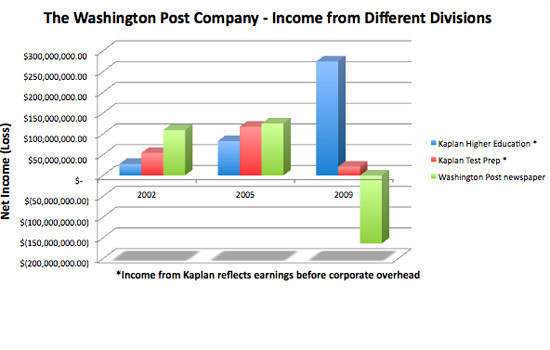
Managers at Kaplan--the highly profitable educational arm of the Washington Post Co.-- have for years pressured academic advisors to use this method to boost enrollment numbers, the former employees said, offering accounts consistent with dozens of complaints filed by former students with the Florida Attorney General's Office and reviewed by The Huffington Post.

Guerilla registration has been part of a concerted effort by the university to keep students enrolled as long as possible in order to harvest more of the federal financial aid dollars that make up nearly all of the company's higher education revenues, according to former Kaplan academic advisor Sheldon Cobbler, who described the practice in detail.
Most advisors had access to a company database that allowed them to view students' e-mail correspondence without their knowledge, said Cobbler, who worked at Kaplan's Fort Lauderdale, Fla., corporate office from 2007 through July of this year. The advisors routinely searched through students' e-mails to look up their user names and passwords for Kaplan's enrollment system, and then they used that information to sign in using multiple student identities, enrolling them in classes they never intended to join, he said.
"The company didn't want students to withdraw," Cobbler said. "They wanted them to stay in class by any means."
Kaplan denied claims that it has engaged in so-called guerilla registration, branding as "false" and a "complete mischaracterization" allegations that it has signed students up for classes without their knowledge.
"No one in this company has ever been asked, advised or permitted to be an impostor in terms of e-mail messages or student accounts," said Kaplan spokesman Mark Harrad. "That's just not acceptable."
Kaplan declined requests for interviews with senior company executives.
Guerilla registration would appear to constitute criminal fraud, said a senior official with the Department of Education, who spoke on condition he not be identified in response to The Huffington Post's description of the practice. The official--who did not confirm the use of the method, but merely characterized its legality-- said it could also trigger criminal penalties under the Federal False Claims Act, which bars the submission of improper claims for government funds.
Cobbler said he did not himself engage in guerrilla registration, but was well aware of its prevalence at Kaplan through conversations with colleagues and discussions with middle managers who told advisors to continue registering students for classes even after they attempted to withdraw. He said guerilla enrollment was an unwritten company practice, but Kaplan management tacitly encouraged academic advisors and admissions recruiters to employ it to increase official enrollment numbers. He said students who remained enrolled often did not even notice that they had been covertly registered for additional classes.
Cobbler was fired from the company last July, he said, after raising concerns about recruiting practices and a lack of academic support services for struggling students. He had already been seeking other job options, he added, because he felt uncomfortable working for an institution that valued profit above all else.
Are you a student at a for-profit college or university who has been misled by deceptive recruiting practices or predatory financial aid? Share your story below!
Are You In Debt To A For-Profit College?

Find a picture, click the participate button, add a title and upload your picture
Cobbler's description of Kaplan's internal operations is consistent with those of other former employees, who described the company as a machine aimed at getting students--and their federal loan dollars--in the door, with little regard for their academic progress or career advancement.
"They called us admissions advisors; we were salesmen," said Mark Meverden, a former Kaplan recruiter who worked in South Florida and was fired in 2008 for not meeting recruitment goals. "Graduation was the farthest thing from their minds. They just wanted us to grab that $10-, $15- or $20,000 obligated to Kaplan University."

Read the entire post at the Huffington Post. http://www.huffingtonpost.com/2010/12/22/kaplan-university-guerilla-registration_n_799741.html
There is little difference between Kaplan and the other for profit trade schools.  The federal expansion of Pell Grants for students was an important investment.  However, if those grants are used up - stolen- by the corporate looters of for profit schools rather than helping students to get a valuable education, then this is a finance abuse similar to the economic crisis of 2007/2009.

Labels: , ,