February 17, 2011

Reporting World News

It is shocking, seen from the perspective of a Western sensibility. It is shaming for the public face of Egypt, with the news of a CBS news correspondent, a vibrant young woman intent on pursuing her reporting from the scene of a world-shattering event, having been attacked by a ravening mob of psychopathic men intent on demonstrating their misogynistic contempt for her, a Western woman.

On the other hand, it might be seen as gender politics as usual in Egypt, where Egyptian women, even those garbed carefully head-to-foot in a traditional black, form-concealing burqa, can have their clothing torn away and be sexually assaulted. It is not unusual for groups of men to prowl the streets to seek out and victimize women.

In crowded streets where throngs of people may gather women have found themselves savagely molested in a society which believes implicitly that women's wiles are responsible for men's inability to discipline their libidos, their urges to reach out and take what they feel is theirs by advantageous proximity.

This is a Neanderthal mentality, a primitive, instinctual, uncivilized sense of male entitlement. And it is one encouraged by a religion and social custom that holds women to be inferior to men, and as such chattels. As objects of physical desire, women's intelligence is held in dispute, their right to sovereign ownership of their bodies, non-existent.

They are themselves to blame if they come to harm at the hands of desiring men if they flaunt their bodies by dressing conspicuously. But if they dress 'modestly', with full body coverings there is no guarantee even then that they will be respected as autonomous beings, free from male persecution, their right to safety and security inviolable.

In Tahrir Square, reporting for "60 Minutes" at a time of great jubilation for the throngs gathered there, after the news of the resignation of President Hosni Mubarak, Lara Logan and her crew found themselves "surrounded by a dangerous element amidst the celebration". A mob of 200 people circling them. She became separated and subjected to a sustained sexual assault and beating.

It was somehow understandable that she would finally be rescued from her unspeakable ordeal by a group of women. Women rescuing women from the predations of a mob of brutal men intent on humiliating and destroying women in the process of satisfying their appetite for physical domination, for shaming women, for destroying their confidence in themselves and the world surrounding them.

In the process of beating and assaulting her, perhaps to further justify in their minds that it was their right and obligation to mercilessly destroy this woman's soul, the words "Jew, Jew!" were repeatedly shouted, inflaming the crowd attacking her all the more. Who could be held in greater contempt by Egyptians than lowly Jews? And identifying this woman as a Jew validated her being brutalized by the sex-crazed thugs.

She had earlier described having been detained by Egyptian police the night before the attack. "We were all blindfolded. They blindfolded me, but they said if I didn't take it off they wouldn't tie my hands. They kept us in stress positions. They made me put my head down. It was all through the night. We were pretty exhausted." She is not a Jew. But she now knows of a certainty what a Jewish woman might feel under those circumstances.

"We were accused of everything", she said. The Egyptian police accused her and her crew of being "Israeli spies", or agents. This is a reflection of the society into which she and her colleagues and other reporters found themselves. They had the relative freedom to report what they saw and heard, but they were also aware of the element of danger involved. A week earlier many reporters had been detained and beaten.

There were other women journalists who complained about being harassed and singled out by crowds in and around Tahrir Square and various other locations. None of them has as yet claimed to have been treated to the kind of attention that Ms. Logan was agonizingly subjected to. They were being treated to an Egyptian specialty.

Where packs of young men go out on occasion to track down young women to grab at their bodies. Even those wearing the khaliji abaya, long black voluminous body-covering gowns. The women have their clothing pulled off along with their veils, and they are savagely groped. And gang-raped.

Women in Egypt have protested but government agencies always denied any such happenings.

So security was never invoked to ensure that the message was sent that it was not all right for mobs of men to prowl about looking for female victims. Whose lives in a Muslim society would be destroyed by such attacks. Since it is the woman's morals, not those of the men who attack them, that are held to be responsible for what happens to women.

The authorities have always denied that these attacks occur. If they did, they insisted, they were rare occurrences, certainly not indicative of anything amiss in society. Accounts of sexual attacks on women were held to be complete fabrications, people making an issue where none existed. Human rights groups understand quite well the paucity of official reports by women who suffer such attacks.

They are held to be responsible, not those who attack them. Filing police reports has been an exercise in frustrating futility. There have been instances when police have stood back and witnessed thugs sexually assaulting women who took part in public protests. The dignity of the women is destroyed, and in the process the honour of her family, and she is held to be responsible.

In this instance, there is no hiding reality; a Western reporter was the victim and there were many witnesses. It may or may not be revealed whether there have been any others who shared her horrendous experience. But it does reveal a deeply disturbing and well-established social malaise in Egyptian society.

Labels: , , ,

Israel-Egypt Peace Accord - in Jeopardy?

Wonderful that there are moderates in Egypt who see the practicality, as did the regime of now-deposed President Hosni Mubarak - inheriting it from his predecessor Anwar Sadat - of maintaining a peace accord (however cold it is) with the State of Israel. Anwar Sadat paid dearly for his bold admission of peace trumping conflict. Because of his initiative Egypt was able to focus on slowly drawing itself into the modern world rather than being financially mired in prosecuting an ideological/religious war after war.

The chief of the Egyptian armed forces, and the ruling forces council, now in control of the administration of the country post-administration-collapse (as though this is particularly new; simply the figurehead is now missing) until such time as the new constitution is prepared (a type of lightning-speed immaculate conception) and elections take place, has assured Israel and the international community that the peace treaty will remain intact.

And that is a profound relief. There is more than sufficient unrest and instability, to put it mildly, in the geography at the present time without the prospect of yet another war potential heating up to once again confront the Arab/Muslim-encircled State of Israel. If, however, that assurance has more than face value. Given that the Muslim Brotherhood is now on the cusp of influence. And its fierce hatred of Israel remains undiminished.

But it isn't just the Muslim Brotherhood, after all, with its possible one-third of Egyptian supporters. It is also the moderate Egyptian politicians who have much to say of the 30-year peace treaty. "The Camp David accord is over", pronounced Dr. Ayman Nur, leader of the Tomorrow party, planning his own candidacy in the forthcoming presidential elections.

He is most certainly playing to popular opinion. Because it is fact, despite the long-standing peace agreement enforced on the population by the National Democratic Party led as president by Hosni Mubarak and his colleagues, that the agreement is an extremely unpopular one with the populace. Egyptians mostly detest Jews. If they think of Jews at all it is to revile them as enemies of Islam.

The most accursed people on the face of the Earth are the Jews that crawl upon the face of the Earth, as far as most Egyptians are concerned. They cannot see a need for a peace agreement with Israel, when it would seem far more in keeping with their sentiments to wage war against the Jewish presence unfathomably permitted to continue soiling an Islam-dedicated geography.

The late Anwar Sadat's courageous admission that it is better to live in peace with one's neighbour than constant war has no resonance with the Egyptian street. Whose hatred for Jews runs so deep that they will attack light-skinned Egyptians on the premise that they are really Jews in their midst. Who will attack a blond female American reporter to viciously sexually assault her in a mob attack, shouting all the while, "Jew, Jew!!!"

Egypt Israel peace

Anwar Sadat, left, Jimmy Carter, center, and Menachem Begin on the White House lawn, after signing the Egyptian-Israeli peace treaty in 1979.

Photo by: Archive
This man, Dr. Ayman Nur, is a secular liberal, expressing the common enough opinion of the man on the street, appealing to their inherited prejudices against the Jew whose irritation-quotient is invaluable as the perennial scapegoat for all that has gone awry in the geography. Anything that occurs that is seen to be detrimental to any Arab country is the result of an accursed Zionist conspiracy.

Labels: , , ,

February 16, 2011

Egypt, Tomorrow

The Egyptian armed forces now securely back in control have given their pledge that theirs is a temporary authority, awaiting the re-writing of the country's constitution and the free and fair election of a new civilian governing body. And then they will obligingly melt into the background. Always on the alert, however, to do their duty to their country. Above all, to save it from itself.

And the Western media, being onside, is a really nice bonus.

Of course, having President Obama finally making up his mind is not a bad thing, either. His tenuously insipid pronouncements, announcements and grandiose glimmerings of control at a time when the U.S. had clearly no influence, spelled confusion in the minds of onlookers only; Barack Obama was in firm control, knew all along what he was conveying; the mangled message was an illusion.

The reality is, according to the jubilant Western media, that the democratic way of life and governance is proving irresistible. It's that 'didn't we tell ya so!?" syndrome. But sometimes a rose is a rose is a rose doesn't work, and this is one of those times when the democracy that is known and loved in the West will be transformed beyond recognition.

It already has been, and will continue to be further disfigured beyond recall.

Bearing in mind that the ruling military council does not want to be seen as controlling the country and has admonished those tasked (including a Muslim Brotherhood representative) to remake the constitution for which they've been given ten days to come up with a miracle of acceptance. After which a leisurely six months will pass to offer competing political parties ample time to organize themselves and mount an election campaign.

A formality that will, in effect, leave two entities standing; the current National Democratic Party, now seen to have been disgraced by their years of corrupt autocratic rule, though in fact they performed for Egypt quite a fine job of administering the affairs of the country with some notable human rights exceptions. And, of course, the waiting-on-tenterhooks-and-finally-opportunity-has-materialized, Muslim Brotherhood.

Take your pick, energized and triumphant Egyptians. Whatever the choice, it will have brought democracy to modern Egypt born from the ashes of ancient Egypt. With the change in the constitution and a change in leadership in style and substance, all will be well. Violent criminals will be plucked off the streets and returned to the jails; police stations will be re-built, as will government buildings that were torched in the peaceful protests.

The historical, irreplaceable and priceless heritage objects of antiquity that were handily heisted will be missed, but that loss too was part of the peaceful protest. In due time foreign investment will return, foreign- and Egyptian-owned manufacturing will get up to speed once again, the stock market will recapture all it lost, and tourism will once again boom.

The price of food will continue to grow, and imported wheat, more costly than ever, will be used for subsidized bread for the poor.

Under a new government something will have to be done about the 40% of Egyptians living well under the poverty line. And while that is being bruited about, jobs for all those unemployed young men must also be achieved. Just incidentally, those who have employment insist it is past time for raises in their livelihood to lift them out of the mire of the employed poor, still better off than the utterly destitute.

And then there's the matter of a monumental deficit and that miserable debt that keeps ballooning. Imagine, if Egypt were on a war footing with its neighbour, Israel, how much of its stretched treasury would be wasted on prosecuting war after war - just like old times. Wait; isn't that just what the Muslim Brotherhood is demanding, that Egypt abrogate its legendarily-despised peace treaty with Israel?

With Shariah law imposed on the country how will that impact on tourism, on relations between foreigners visiting the country, given to understand that casual Western-style clothing is no longer permissible at those overheated vacation spots? And relations between Egyptian Copts and the majority Muslim population under the Muslim Brotherhood's rule, possibly a formula for a new round of persecution?

The possibilities that democracy brings to Egypt seem boundless, fascinating, quite unrecognizable. Just as well that Hosni Mubarak will likely not be around to witness the tumult, the downward-spiralling changes that would surely break his heart.

Labels: , , , , , ,

February 14, 2011

Looted Antiquities

Greece would love Britain to return to them, as the rightful heritage owners, the Elgin Marbles. Italy would very much appreciate the 'return' to them of a prized sculpture by Bernini, which Canadians have ensconced at the National Gallery. And Egypt would far prefer to be in possession of its marvellous ancient treasures than to have them in the possession of foreign countries which themselves treasure what they have.

Egypt and its treasures; the fabulous Sphinx which suffered the indignity of being shot at by Napoleon's invading forces.

And adventurers-cum-archaeologists like Giovanni Belzoni, a former circus strongman who became fascinated with adventure and thought of himself as an archaeologist, who adventured into Egypt and took it upon himself to dig and destroy and loot and sell to international buyers eager to obtain the fabulous historical treasures of ancient Egypt from him, as the then-compliant Egyptian government stood by.

Belzoni and others like him even used explosives to blast apart immense structures to obtain the pieces they wanted.

And when it came to tomb-robbing, there was no one as courageous, audacious and adventurous as ancient tomb robbers, Egyptians themselves, who, despite the belief in curses that would destroy the lives of those who disturbed the fabulous treasures buried with noblemen and noblewomen and wealthy dynastic Egyptians and their Pharaohs, did just that. Looting the ancient tombs of all they could see of value.

In some instances that looting took place soon after the burials, and for centuries after, up to the present time. Ancient architects of tombs tried their utmost to confound the thieves by clever distracting devices, hidden areas, and mysterious tunnels blocked by great stones no human enterprise could budge. Despite all the subterfuges and clever hidden entrances, most tombs were ransacked of their valuables.

The tomb of Akhenaten was destroyed by vandals who had the blessing of the ruling dynasty that followed Akhenaten. Who was despised by most of the ruling class for the unorthodoxy of his rule, adhering to his belief in one single god, rejecting the classic mythology of a panoply of gods, a belief sacred to Egypt. Reverence for the god Aten, the life-giving sun, died with the death of Akhenaten.

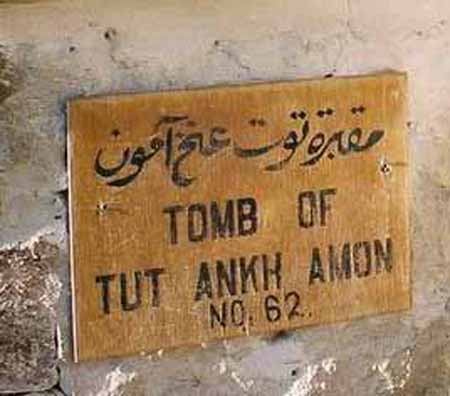
A rare exception was the tomb of the boy-king, Tutankhamen. Whose tomb, uncovered and entered by Howard Carter in 1922, was the best preserved and most intact pharaonic tomb ever found. Even though it was suspected to have been broken into twice previously, in antiquity.

The Egyptian Museum, which prides itself on its national heritage and the treasures it has amassed, has released information that its inventory count of treasures have been found to be missing some key and critical treasures. Priceless antiquities dating from the 13th Century BC have been looted. When, it was assumed, dedicated and knowledgeable thieves entered the museum through a skylight in the confusion surrounding the anti-regime protesters assembled on Tahrir Square, adjacent the Museum.

"An investigation has begun to search for the people who have taken these objects, and the police and the army plan to follow up with the criminals already in custody", stated Zahi Hawass, head of the Supreme Council of Antiquities. "I have said if the Egyptian Museum is safe, then Egypt is safe. However, I am now concerned Egypt is not safe", he stated on his official web site. The pride of the country's past has been once again looted.

Eighteen priceless antiquities, two statues of Tutankhamen included, taken, among other wonderful ancient objects of art and antiquity. Aside from those missing objects, around 70 are said to have been damaged. International art collectors whose greed and zest to take possession of rare and beautiful heritage objects will be approached by dealers in the illicit who know their potential customers.

The ancient trade of grave robbers is still alive and doing very well for itself in the very grey market of rare and outstanding works of art and antiquities for those who will pay, and not enquire as to provenance and legality.

Egypt is not safe.

Labels: , , ,

February 13, 2011

Celebrations

Celebrants have rallied on Parliament Hill to express solidarity with the people of Egypt on the occasion of the downfall of their former president, Hosni Mubarak. A sense of accomplishment and hope for the future of a traditional Arab state transitioning to democracy has stimulated people everywhere to feel positively about the prospects of Egypt moving confidently into the 21st Century.

As though overnight there will be a remarkable transition from a Dictator-led republic to a relinquishing of power by the country's powerful, politically-invested armed forces to a civilian-led government dedicated to the institution of democracy for the greater good of the people. Sounds great in theory. But that very transition will be time-consuming and difficult to achieve.

In the interim, the problems that assail the country are the same for the most part that confront many other emerging economies, not all of them in the Middle East, but most (including of course Africa). All countries in the Middle East however, with the exception of Israel have the issue of human rights and freedoms to attend to eventually, since all with the exception of Israel are deficient in those areas.

It is tedious in the extreme to see that the usual self-proclaimed human-righteous activists, the opposition party, self-reverentials were out in force to speak disapprovingly of the measured stance of the Government of Canada and Prime Minister Stephen Harper, remarking on the revolutionary hand-over that has taken place in Egypt. MP Paul Dewar, and Monia Mazigh front and centre.

Revolutionary; not quite, since an armed forces-backed republic has seen its head of state removed and the armed forces moving in to restore order and security, urging the protesters who vociferously, implacably, insisted on that removal, to disperse and permit the country to return to normal. Whether or not the armed forces will conspire to remain in power with a figurehead, or permit the country to remake itself under civilian rule is yet to be seen.

Yet to be seen is the place that the Muslim Brotherhood will find for itself in the governance of the country. Most of the youth leadership of the protesters may have rejected the feasibility of the Muslim Brotherhood profiting politically from their epic struggle to remove their president, but the people do speak, since this was a popular-people revolution, and that people in the majority prefer the domination of Islam in their lives.

When the Soviet Union disintegrated, Russians and the former satellite countries of the USSR entertained visions of themselves entering a state of democracy, and chief among their dreams was that of becoming a capitalist society. For, as they well knew, capitalism meant wealth and with a democratic capitalist transformation everyone would be wealthy.

And so, Russia declined into poverty, the expectations of its people dashed, and state monopolies sold to private bidders at fire sale prices. It took quite a while for Russia to find its political, social and economic legs, before it could feel confident about itself and its future, and before it began to prosper under a free market.

This is not what Egyptians are looking forward to, a long and insufferably miserable time of reaching for that elusive goal. With democracy and freedoms should come enterprise and success at a galloping pace, making them comfortable and secure. It should, if dreams were reality, but reality does not express dreams. Often nightmares ensue before the merest whisper of a dream can evolve.

It's not surprising that people who feel themselves newly liberated exult and dream about instant gratification of their desires. It is, however, unconscionable when those who know better encourage them to believe in miracles, rather than render calm congratulations and proffer sincere hopes for a better future.

Labels: , , , ,

Struggling Appearances

Barack Obama hardly knew where to turn. Desert a political friend to whom much was owed by the United States, as a pivotal actor in the Middle East, aiding to control the rise of Islamist extremism? Or give absence to the fervent belief in the democratic ideal that every president before him has cleaved to?

Particularly in view of his own speech in Cairo in his first year in office, travelling internationally to give inspirational speeches to the Muslim world, and to university students lauding democracy and urging those students to visualize such a future for themselves in a new kind of Egypt.

Did the eloquence and passionate speaking style of this new American president motivate and inspire the young Egyptian men to take their resolute action? Did they foresee the potential consequences? They, after all, know Egypt far more intimately than an American president.

Are we to believe that since they were university students their political outlook was secular in nature? That none subscribed to the ideology say, of the Muslim Brotherhood?

Time will most certainly tell. Meanwhile, President Obama's Secretary of State has lauded the Muslim Brotherhood for agreeing to participate in talks with the purpose of arriving at a general agreement for the near future of Egypt. And James Clapper, chief of the U.S. National Intelligence Agency spoke in glowing terms of the Muslim Brotherhood, as moderate and "largely secular" in nature, posing no threat to Egypt, let alone the Middle East for they have "eschewed violence".

With loyal and knowledgeable advisers like these, President Obama found the direction he was looking for. Yes, he could, after all, throw Hosni Mubarak into the trash bin of history; his initial hesitation to do so did not reflect the firm assurance of a President of the United States who, like the Almighty, is omniscient and omnipotent.

So, while praising Hosni Mubarak for his past service to his country, allied with U.S. interests, he sternly urged his timely departure.

The comfort and assurances he failed to extend to Iranians protesting their fanatically tyrannical theistic state, he sincerely offered to the youthful protesters in Cairo. Leaving heads of state in Jordan, Saudi Arabia, Kuwait a trifle shaken at the unanticipated manner in which the U.S. president, aided and abetted by the European Union, was able to shed his close alliance with a former ally in favour of being "on the right side of history".

A nice contrast was the calm statement of the Prime Minister of Canada, that he and his country respected Mr. Mubarak's 'decision' to step down "in order to promote peace and stability". That Canada "encourages all parties to move forward with a peaceful, meaningful, credible and orderly democratic reform process toward new leadership". Not forgetting the need for regional "stability", identifying the peace treaty with Israel.

Of course all of this is wishful thinking on the part of governments outside the Middle East. Mournful regret at seeing a benevolent dictator of a police state summarily removed from office, and at the same time, knowing the unstable and tyranny-prone nature of the Middle East, never devoted to the concept of human rights, could just as easily turn into yet another Islamist Republic.

It could do that, despite the oversight of the politically restrained, secular-outlook national armed forces; a half-million-strong, now in control of a substantial portion of the Arab world. Because, simply put, a large proportion of Egyptians, about 80%, would like to see the return of Shariah law. Unless the armed forces intend to rule in perpetuity, rather than to hand the administration to a civilian authority in due time.

Which should give all the onlookers something to think about.

And because youthful Egyptians so utterly enthralled with their success have not thought deeply about the future of their country they no doubt feel jobs will instantly appear, along with more reasonable prices for imported wheat and fuel.

If they have given any thought at all to the devastating blow their 'revolution' has cost the country, the ameliorative steps that will need to be taken to bring it back to economic security, it might indicate some maturity of thought beyond the buoyant ebullience of belligerent youth acting out their grievances.

In the minds of democratic countries' leaders looking in on the disruptive influence that their example has caused, should be some lingering doubts; that a change to democracy does not result overnight. Rather a long, arduous process of re-orientation for a society that has long been mired in its social, religious and political structure geared to their history and culture, will have to be undertaken, and this will take years to achieve.

In the interim, with no miraculous appearance of more job openings for the restless young and the poor, with no levelling off of the rise of the cost of fundamental foods and energy sources, it is not too likely that the complaints that originally occasioned protests will be addressed. It will be instructive to see how long the state of jubilation will last.

Labels: , , , ,

February 12, 2011

Making History

"When a system of government and a culture of governance has prevailed for many, many years, it cannot be rectified or corrected over night. There are institutional issues that need to be addressed and there are cultural issues that must be addressed." Egyptian Ambassador Wael Ahmed Kamal Aboul Magd, Canada
Reasonable and to the point. Which also speaks to the point that President Hosni Mubarak, now deposed and out of power in Egypt, also made. It was his intention to guide his country through that transitional period, at its inception. And to step away from his guiding post at the earliest possible opportunity. Which suggestion to his people only served to further enrage the anti-regime protesters whose success in removing him from office his wishes further encouraged.

Events moved swiftly, far more so than any onlooker, within or outside Egypt, might have imagined. Because, in fact, the unimaginable occurred. A small but growing, resolute group of disaffected Egyptian youth decided that they would no longer live under the authoritarian rule that had marked their lives and that of their parents for three decades. Not that Egypt had ever known any other kind of rule, even if some might point to the Nasser years as an experiment in socialist iron-fisted democracy.

Many Egyptians, having experienced dire living conditions due to poverty, poor civic infrastructure, religious intolerance between the ancient Christian Copt community and Egyptian Muslims, and the heavy institutional hand of state security, chose to leave their country. Over many decades 55,000 Egyptians assembled through emigration and birth, to live in Canada. They retain, as is natural, a deep-rooted interest in their country of origin.

And they celebrate the vast changes that have taken place in Egypt, with the hope that more beneficial changes are yet to take place. The uncertainty of the outcome of the protest must have been riveting for them. They feel a new confidence in their old country of origin, that it will now take a turn toward the kind of secular democracy that will advance Egypt into the 21st Century for a prosperous and sustainable future.

The concerns expressed by outsiders that with the vacuum left by the departure of President Mubarak and the dissolution of the executive of his National Democratic party, the way has been opened for the only well-organized political group remaining in the country, the Muslim Brotherhood, is dismissed by many.

Perhaps not, however, those within Canada who do represent the interests of the Muslim Brotherhood, active throughout the world, as a political force.

"I don't believe Egyptians want to go back to that. The economy has grown quite a bit during the peace (with Israel), and my hope is that they (Egyptians) want to preserve the peace", according to Sherif Barakat, president of the Egyptian-Canadian Cultural Association of Ottawa, in response to expressed concerns about the possibility that under a new authority Egypt might break its peace ties with Israel.

We can only hope.

Labels: , ,

An Epic Spasm

A man who ruled mindful of his destiny, viewing himself as the protector of an ancient civilized legacy, hoping to achieve and maintain conformity to his country's values, cultural and religious, has been deposed. Firm autocracy was fundamental to his rule, and fundamental to the politics and social condition of his country. He was no brutal tyrant, but he was a ruthless overseer of his country's well-being, because he felt that was what was required of him.

In the course of his rule those who envisioned another course for their country, a different kind of politics, those who criticized his decision-making and above all, the cruel conditions of sentencing and incarceration for his regime's critics and perceived enemies, became victims of his regime. The kinds of freedoms, of opinion, of assembly, of news, of equality of opportunity that were prevalent in the West were denied the citizens of Egypt.

In the geography of the greater Middle East President Hosni Mubarak saw a picture greater than his country; he saw his country leading the Middle East, as it had done historically, as a guide and a mentor toward the future and an Arab communion with the future. That future was a long time ripening, in the course of which wars took place in defiance of a Jewish State, and a peace agreement reached and maintained that estranged Egypt from its Arab neighbours.

The people of Egypt are not universally grateful to the calm guiding stewardship of Hosni Mubarak, his steering the country toward economic diversity and political empowerment, social acceptance of other religions and a steady state of nervous peace. They were resentful toward his lack of commitment to political diversity, to the prospect of secular democracy beyond the pretense of flawed and corrupted public shows called elections which returned his party to power as though an alternative existed.

No one envisaged such a popular social upheaval as a sustained anti-regime protest resulting in a successful revolution that overturned his dynasty and that of his colleagues, leaving the country's armed forces in total charge of a transition period leading, the protesters hope, to a secular democratic government that will instill changes that will benefit the country. As for the changes, whether a new administration could achieve greater advances than Mr. Mubarak managed, that will be seen.

Whether such a regime will eventuate, or another, more sinister, darker one to match those that have managed to surmount all resistance in other Islamic countries like Iran and Lebanon (and Gaza); perhaps Syria, Turkey, Jordan, Tunisia, Yemen, Pakistan,
Afghanistan and Algeria, is yet to be seen.

But what began in Algeria, spread to Tunisia, infected Egypt and succeeded there, has now broadened its impact.

Labels: , ,

February 11, 2011

The Land of Life and Death

"I say it again that I have lived for the sake of this nation, protecting the nation and carrying my responsibilities and Egypt will remain above any individual and above everybody." President Hosni Mubarak
Well then, the young and the restive in Cairo's Tahrir Square can now empty the square, which having physically ruined, they assiduously clean up after themselves, lest they be accused of creating a squalid camp site in the middle of Cairo. They have made world news by their intransigent insistence that they have the right and the human need to be governed fairly and justly.

Their message was heard around the world, and the world accorded them the respect that their government sought to deny them.

They will not recognize that in the geography that they inhabit their government was as good as it gets. A government that kept them free from violent strife, and free from an astringent Islamism that would proscribe their lives in ways unimagined. In battling the Muslim Brotherhood struggling to impose their values on the country, the government imposed restrictions on the judiciary, the news media and the new electronic media, chafing the sensibilities of the young.

The young, the educated, the unemployed, the idealists whose wide and widening circle of contacts kept them informed through the new electronic media of what it was they could and perhaps should be striving to achieve. For themselves and for their country. The speech of their reluctantly departing president who did for his country what he felt was needful, was heart wrenching in its sincerity and tone of puzzled regret.

For he did effectively give his life for his nation, in war and in peace. He achieved much in brokering his country back into the Arab League after it was expelled valuing peace with a neighbour over war, then ensuring that Egypt was once again installed as the Arab League's elder statesman-nation. He attempted to achieve what international powers could not; peace between Israel and the Palestinians, but that eluded him, too.

He opened the country to a new economic reality, but he could not create the job numbers that would employ the ever-expanding youth demographic. And, in the most populous Arab country of the world he was unable to conquer poverty and ignorance. His failing was an inability to envision Egypt as a nascent democracy, feeling that only he, his colleagues and the national defence forces were capable of governing and maintaining order.

Now that the ultimate demand of the anti-regime protesters has been met, the world remains witness to another suspense; how the larger theatre on display will play itself out.
"Egypt is the land of life and death ... I and Egypt will not part until I am buried in its soil."

Labels: , ,

February 10, 2011

Firmly In Control

The world waited with bated breath. The U.S. administration let it be known discreetly that President Hosni Mubarak of Egypt was prepared to announce he was stepping down from the presidency, meeting the demands of the anti-government protesters in Tahrir Square. Great relief, that finally the protesters, who have repeatedly refused the armed forces' request to move on, vacate the square and permit life to return to normal, would have no reason to continue their vigil.

President Mubarak had other ideas. He resolutely refused to leave his post, at a time when he was needed to oversee an orderly transition in government. He and his newly-appointed cabinet have already made considerable concessions to the demands of the anti-regime crowd. They have met with opposition party representatives. Have taken strides toward changes that will ameliorate hardship for many.

But the country is in desperate need of calm, of a return to order. So that people can return to opened and operating shops and manufacturing enterprises, so that foreign investors will have their doubts erased that their investments will be imperilled by anarchic chaos, and so that tourism can resume, at the high point in the season.

The stock exchange will re-open, banks will be prepared for business, people will be paid, food deliveries can re-commence as transportation is once again enabled, and bakeries will receive their deliveries of wheat so they can bake the bread that the poor are entitled to. President Mubarak spoke to his people calmly and with dignified purpose.

The Western media interpreted his speech as "paternalistic", as "arrogant", described him as "defiant". He was, in fact, comporting himself as would a confident, determined president of a great country whose valuable experience and level-headed direction his country needs at this time in its history. The old order has come to a screeching halt. The new stands on the cusp of delivery.

It is the anarchic energy of the tens of thousands of protesters who demand the immediate ouster of their president that has, in fact, been "defiant", not the dignified response of their president. He and his colleagues are perfectly correct that it is not the nervous tension of foreign governments that will impel their actions toward the democracy the protesters claim is their right.

Whether democracy does in fact result from the upheaval of the past few weeks and the following weeks and months, history will tell. In the meanwhile, President Mubarak has demonstrated his mettle in firmly informing his international colleagues that it is he and his government who will see their country into the future, not they.

Labels: , , ,

February 9, 2011

Euphoria in Tahrir Square

The anti-regime protesters in Cairo's Tahrir Square are exultant. They are still there. They have the support they craved. They are euphoric with the sense of having accomplished the seemingly impossible. They were not physically extracted from the centre of Cairo. Their protest movement has exhilarated the young and the restless. Their will has prevailed over that of the sclerotic old men who have ruled Egypt like tyrants.

Those tyrants, through the force of their will have subjected Egypt to a peace treaty with a neighbour. The young of Egypt, some 30% of whom are unemployed may feel they would enjoy life so much more if the excitement of war, for example, was upon the land, instead of the cold peace that prevails, the peace that has allowed the country to develop rather than stagnate.

Theirs is not a wealthy country. Too many live in poverty. There are restrictions upon peoples' freedoms. But this is the Middle East, where those restrictions have expressed tradition, where tyrants have always ruled, where poverty has always existed, where justice is seldom served, where fractious disagreements between tribes and nations have resulted in bloodshed.

But hundreds of thousands of Egyptians resent their poverty, resent rising food prices, resent unemployment and no prospects for the future. Thus, the revolution they have managed to impose upon the administration of President Hosni Mubarak and his National Democratic Party that has ruled for far too long. Poverty allied with war seems so much more appealing.

This is the devil they know. In opposing that devil, what have they accomplished, aside from that deep inner sense of satisfaction with themselves and their growing pride in their resoluteness? They have indeed accomplished much; the closure of the country's stock exchange that speedily began to bleed stock values.

For each day of protest the country lost at least $310-million in GDP. Banks closed, ATMs ran out of cash, businesses were shuttered, people were not paid. Food and amenities became scarce because of difficulties in deliveries; meat prices quadrupled, shelves were cleared of goods in panic-buying excess.

Foreign investors hurriedly left that country that was in anarchic chaos; the Egyptian pound lost value. Public and state infrastructure damage from rioting, burning and looting came in at approximately $862-million. Tourism, representing a vital economic contribution, has been brought to a dead halt. Foreign countries rushed their nationals to safety.

International companies shut down their factories and workers were laid off. Quite an accomplishment. But no negotiation with the government. Which is pleading with the protesters to return from whence they came, and evacuate Tahrir Square, to enable life to return to normal. And the promised transition will proceed.

"When it's a revolution, you're not supposed to negotiate." A foolish sentiment from the mouths of the naive, prepared to tear down the house that shelters them all, and revel in exposure to the raw elements that wash away security and hope for the future.

Never fear; the Muslim Brotherhood hovers nearby. All of Egypt's problems will be solved.

Perhaps not to everyone's liking.

Labels: , , ,

February 8, 2011

Egyptian Democracy

The dictator is also an admirable statesman, an able presidential lawmaker for a fractious, excitable population, and an Egyptian patriot. Egypt is without doubt a difficult country to lead. It has a very large population, almost half of whom live under the poverty line. As a Muslim majority country almost 20% of the population is Christian, and hostilities between the two religions often lead to violence.

President Hosni Mubarak has honoured Egypt's Christians as much as is possible, protecting them from the intimidation and violence that erupts on occasion, holding to account those who attack Christian Egyptians. The Copts have seen nothing like the persecution that has assailed Christians in Syria, Turkey, Iran, Iraq and Gaza. Their Churches are protected, just as Egypt's ancient Synagogues (largely as historical artefacts) have been.

Because of forward-looking economic decisions President Mubarak has taken the country's GDP grew at a steady rate in the past few years, approximating 6%; seeing a set-back because of the global financial disaster. But there is huge unemployment among the youth of Egypt, and the country would need to grow at the rate of 10% annually to provide anything close to adequate jobs for those entering the work force.

For a tyrant, who has permitted the country's police and intelligence services to exact atrocious brutality upon those unfortunate enough to come to their attention, he has also governed insightfully and fairly, compared to his Middle East counterparts. The current 'secular' uprising led by the youth of Egypt denounces the methods and politics of their president and his National Democratic party, insisting they leave.

Egypt is an ancient country, and has never experienced anything approximating democracy, and many among its 90-million people live in financial insecurity. The country has seen high inflation, rising food and fuel costs, and scarcity in some vital commodities. It has a well developed education system and a representative number of university graduates.

The protesters calling for President Mubarak's immediate ouster from office, and a complete change in the country's administration, drawing on the universal call for democratic reform seen elsewhere now in Tunisia, Algeria, Jordan and Syria, will not be placated, they insist, by the too-little-too-late moves of the government to meet some of their demands.

They will make common cause with any who resist the government.

The Muslim Brotherhood stands prepared to fill the vacuum that would occur should the current NDP government fall. And what of the population of the country as a whole? Ready for enlightened democracy? What is the kind of democracy they envision? According to the Pew Global Attitudes Project and World-PublicOpinion.org poll, some answers have surfaced.

Roughly three quarters of the population supports "strict imposition of Sharia law". Fifty percent support workplace gender segregation. Fully 82% feel adulterers should be stoned, and 77% consider whipping and the hacking off hands justifiable punishment for theft. Eighty-four percent of Egyptians look favourably on the death penalty for Muslims who recant their faith.

Overwhelmingly, 91% of Egyptians insist that "Western values (be kept) out of Islamic countries", and 67% visualize the value "to unify all Islamic countries into a single Islamic state or caliphate". Which is where the Muslim Brotherhood steps smartly into office. For this is their agenda, and more.

The crowds in Tahrir Square shouting for freedom and democracy would have to accommodate themselves to the backward step of re-instituting laws demanding female genital mutilation - which President Mubarak had outlawed in 2007. Lands taken illegally from Christians would, under the Muslim Brotherhood, never be returned to their lawful owners, as they were under President Mubarak.

And most Egyptians support the call of the Muslim Brotherhood to release Egypt from its peace agreement with Israel. One thing the crowd in Tahrir Square and the Muslim Brotherhood do definitely have in common is a zest to return to war with Israel, for both the Egyptian population at large and the Muslim Brotherhood abhor Israel.

This is a fascinating and quite contrary picture of democracy as it is known and practised in the West. This is when truly, a rose is not a rose, but a stinking cabbage.

Labels: , , ,

Moderates in Egypt ?

Egyptian "Moderates"

The situation in Egypt remains murky as Vice President Omar Suleiman talks with opposition leaders about what comes next. FPIF contributor Islam Qasem, in Three Possible Scenarios for Egypt, sketches out the trajectories: Mubarak rides out the storm, he resigns but leaves the regime intact, or there's a more-or-less clean sweep. The last alternative, which the protestors are demanding, will be the most interesting: "Egyptian society will have to endure a hard period of transition, during which lessons will have to be learned in political compromise, pragmatism, and consensus," he writes. "At the same time, Islamists of all stripes and colors will be emboldened."
The Obama administration has largely echoed the current Egyptian leadership's calls for "orderly transition." As FPIF contributors Asli Bali and Aziz Rana explain in The Fake Moderation of America's Moderate Mideast Allies, the frame of "order versus chaos" is a false one, for the protestors have been the orderly party in the conflict. Meanwhile, "the regime that Western leaders have lauded for decades as a beacon of moderation has unleashed its salaried, plainclothes security personnel to loot its own cities, set fire to its streets, and attack unarmed protesters with Molotov cocktails, knives, U.S.-supplied tear gas canisters, and live ammunition. The new Vice President Suleiman now promises to employ the same security services to arrest those the regime chooses to blame for the disorder and violence it has wrought."
In light of its wishy-washy response to the protests in Egypt and earlier in Tunisia, the United States should rethink its whole approach to democracy promotion. "The lesson of Tunis, Sanaa, and Cairo is that democracy rhetoric is more than a strategy for the assertion of American dominance," writes FPIF contributor Abena Ampofoa Asare in Regime Change Redux. "On the contrary, it is a language that fuses moral and political power into a radical claim that every human being deserves a voice in the decisions that affect their daily lives. The United States tried to promote democracy through the barrel of a gun. It's time now for Washington to support democracy in the Middle East by pressing its authoritarian allies to put their guns away."

Finally, in an interview with FPIF, Middle East expert and blogger extraordinaire Juan Cole talks about the jailed Islamists in Egypt. In contrast to extremist Sayeed Qutb, one of the intellectual progenitors of al-Qaeda who spent several years in Egyptian jail before his ultimate execution, "the people jailed in Egypt in the 1990s tended to be reflective about what happened to them, about whether they were right about shooting down innocent tourists," Cole said. "The Islamic group Gama'a Islamiya actually broke with the blind sheikh Omar Abdel-Rahman, and the leadership in prison started to issue repentance pamphlets. These are short chapbooks in which they reinterpret their own history and the Qur'an. They argue, at least on a practical basis, for a non-violent strategy. The leadership of the movement was announcing themselves as peaceful activists henceforth."
Don't forget to visit our Focal Points blog, which is buzzing with information and insight on Egypt and the uprising's implications for U.S. policy toward the Middle East.
From Foreign Policy in Focus.
Note. Last year the Obama Administration, and Secretary Hillary Clinton, held out for a "moderate" resolution to the Honduran Coup.  In the end, the old guard stayed in power and the elected President was dismissed. 

Labels: , ,

February 7, 2011

Iran Triumphant

The Islamic Republic of Iran's Supreme Leader has been heartened to see that sincere protests against an autocratic government by young people insisting on their right to freedom and equality, to democratic reform, is taking very serious steps toward success. He is jubilant on behalf of the Egyptian people. They may be Arab, and Iranians are Aryan, but they are both joined in Islam.

"This explosion we see among the people of Egypt is the appropriate response to this great betrayal that the traitor dictator committed against his people", railed Ayatollah Ali Khamenei. No doubt to great acclaim on the part of those gathered to listen. Who would, of course, never think of comparing the incomparable.

As, for example when Green Party protesters in Tehran came out in their tens of thousands to challenge the 10th presidential elections for the fraud they were recognized to be internationally. At that time the Middle East cringed with the hope that a change in that government might occur, and Iran present as less a threat to them than it currently does.

But those Iranian protesters were shot at and beaten by the Basiji militia, and by the Revolutionary Guards who knew to whom they were indebted, and it was not the reformers. The voices raised in exultation at the prospect of overturning the brutal Iranian regime were muted as their they and their leaders were jailed, tortured or isolated from the populace.

Certainly a successful settling of accounts. And now Iran goes on its course toward total domination of the Middle East, and it has its friends, like Turkey, seeing no reason to fear Iran's conquest of nuclear armament production. Religious persecution, death sentences without trial or jury for dissenters have elevated the Supreme Leader to a position of omnipotence.

Who now will stand courageously forward to defy his edicts brought down in the name of the Iranian Revolution? Editor of the Iranian newspaper Kayhan commenting approvingly on Egypt's travail:
"All the demands and slogans are in complete congruence with the teachings of the Islamic revolution: 'Death to America'; 'Death to Israel'; 'Hail Islam'; 'Death to the Seculars'; 'Islam is My religion."
Courage? It is still there, cowering, but willing to raise its head when the occasion demands: "The starting point of what we are now witnessing on the streets of Tunis, Sanaa, Cairo, Alexandria and Suez can undoubtedly be traced back to the days of June 2009 when people took to the streets of Tehran in their millions shouting 'Where is my vote'" wrote the leader of Iran's Green protest movement, Mir Hossein Mousavi.

Well, Mr. Mousavi, where is your vote? What are those million defiant (subdued) Iranians now engaged with, in preparation for the day when their will may prevail and their abysmally totalitarian government breaking records with their obsession in executing those who offend their righteous sense of Islamism, will be overturned?

Labels: , , , ,

February 6, 2011

Be Fruitful And Multiply

Thank you, Prime Minister Stephen Harper, for articulating an official response on behalf of Canada that does not slavishly emulate that of our great good neighbour, the United States of America. Although Canada did not have a close alliance with Egypt as the U.S. has had, guiding that country to reflect American values as much as possible in a geography where dictators, oil sheiks, monarchies reign and repress their populations, we do have many Egyptian-Canadians.

Many of whom doubtless feel as do the protesters in Tahrir Square, that the country would be better off without the autocratic oversight of President Hosni Mubarak. But Canada, through Prime Minister Harper, is not calling for the immediate stepping down of President Hosni Mubarak. Prime Minister Harper called for patience and respect and the proffering of dignity to a man who has served his country long.

Who has overseen a country of 90 million people, administering the tenth largest standing army in the world, maintaining a peace treaty with a neighbour reviled by most other nations in the neighbourhood, and brought the economy of his country to an enviable place, despite a lack of huge natural resources other than moderate amounts of oil and gas reserves.

Under his rule, while the country still has many poor, they are better off than they were, and government subsidized bread helps keep body and soul intact. One huge natural resource Egypt has unparalleled by all the others but Iran and Iraq, is antiquities and tourism, historical relics and pride in a fabled heritage.

Most Egyptians, unlike their president and his colleagues, see no value in maintaining a peace agreement with their neighbour, the State of Israel. Mr. Mubarak recognized great value to his country's dignity and its treasury by avoiding future wars with the State of Israel. It is possible that with his removal from office, that peace agreement will be abrogated.

When his colleague and former fellow General, President Anwar al-Sadat had the courage to defy the other Arab states by signing a peace treaty with Israel, on his assassination as reward for that courage, vice-president Mubarak stepped up to the presidency. Knowing he was right, even as his country was thrown out of the Arab League, he remained faithful to his peace principles.

Both Canada and the United States remain staunch allies of Israel, defenders of her right to peaceful existence among her neighbours. The U.S. has for decades given both Israel and Egypt billions in assistance, three-quarters of which is returned to the U.S. as payment for modern arms, greatly assisting employment in the United States. Egypt's unemployment remained dismal.

But then, this is a country whose majority religion deems it a gift of God and to God to be fruitful and multiply. It is a country, like the others in the region, with an over-abundance of young. Including young men who are restive and unhappily unemployed and as such unable to plan for their futures. As such, susceptible to the blandishments of the Muslim Brotherhood.

Now, in Egypt's hour of pending political collapse, the United States and its European allies urge President Mubarak, their long-time ally in the fight against fundamentalist Islamist terrorists, to step away, absent himself, surrender to the viral demands of democratic-inclined protesters. Who do not seem to understand that when power steps away, a vacuum occurs inviting not necessarily democracy but chaos and anarchy.

In response, the Prime Minister whom the embattled President Mubarak has newly appointed explains on behalf of his colleague: "The majority of Egyptians want honourable treatment and respect for a president who has spent a long time in power, in a civilized manner that is in keeping with the nature of the Egyptian people."

And Canada's Prime Minister Harper explains his view, that the new leadership implement reforms that "lead towards a future that is not simply more democratic, but a future where that democracy is guided by such values as non-violence, as the rule of law, as respect and respect for human rights, including the rights of minorities, including the rights of religious minorities."

History is being made. We will see whether we are the better for it.

Labels: , , ,

January 26, 2011

EU has effrontery to refer to Egyptian citizens' "yearnings".

A report from the EU Observer, linked here, carries this headline "EU to Cairo: respect 'legitimate yearnings' of citizens"....... what about the yearnings of the citizens of the EU for a return of their democracies, an end to unaudited spending excesses, a halt to systemised corruption and respect for the results of national referenda?

Look at the poll results in Germany, posted immediately beneath this posting, at lunchtime today! 68%, that is correct 68% of those asked expressed distrust of the Euro currency! (Link added to poll results on Open Europe Blog 1315 CET 27/11/11)

Labels: , ,

Egypt - Mubarak's son flees to Britain, reports!

As I pointed out last Sunday, Egypt is where some press attention should nows be directed. The Times of India now reports that President Mubarak's son has fled to Britain, read here.

Labels:

January 23, 2011

A rare item of good journalism from Britain's mainstream media.

Although of little relevance to the topics of main interest to this blog, a piece of good, informative and intelligent reporting from a UK based journalist in a British broadsheet is nowadays such a rare item these days, that it is worth linking to. Read Jack Shenker in this morning's Observer from here, on what will likely soon become one of the West's main concerns.

Labels:

September 17, 2009

ADOPTIONS ARE ILLEGAL IN EGYPT

Something worth noting from Egypt, for a long time now an Islamic bastion:
CAIRO (AP) - An Egyptian judge has convicted two American couples of human trafficking in an illegal adoptions case and sentenced them to two years in prison.

The judge also ordered the four to pay a fine of 100,000 Egyptian pounds, or $18,153.

Iris Botros and Louis Andros of Durham, North Carolina, and Egyptian-born Suzan Hagoulf and Medhat Metyas have been on trial since earlier this year.

They sought to adopt children in Egypt, where an orphanage allegedly gave them forged documents stating the adoptive children were born to them.

Seven Egyptians were also sentenced, including a doctor who provided fake birth certificates.

Adoptions are illegal for Muslims in Egypt and nearly impossible for Christians.

It was unclear if the couples would appeal Thursday's verdicts.
If adoptions really are illegal for Muslims there, that's surprising, but less so that they're forbidden for Christians. I won't be surprised if the charges of fake birth certificates are phony, but what this certainly does tell is that children there are surely doomed to darkness by adults being barred from adopting them.

Labels: ,

August 3, 2009

Photos from egypt - 24 Pics

Photos from egypt

Photos from egypt
Photos from egypt
Photos from egypt
Photos from egypt
Photos from egypt
Photos from egypt
Photos from egypt
Photos from egypt
Photos from egypt
Photos from egypt
Photos from egypt
Photos from egypt
Photos from egypt
Photos from egypt
Photos from egypt
Photos from egypt
Photos from egypt
Photos from egypt
Photos from egypt
Photos from egypt
Photos from egypt
Photos from egypt
Photos from egypt

Labels: